Building out a kit for a woman
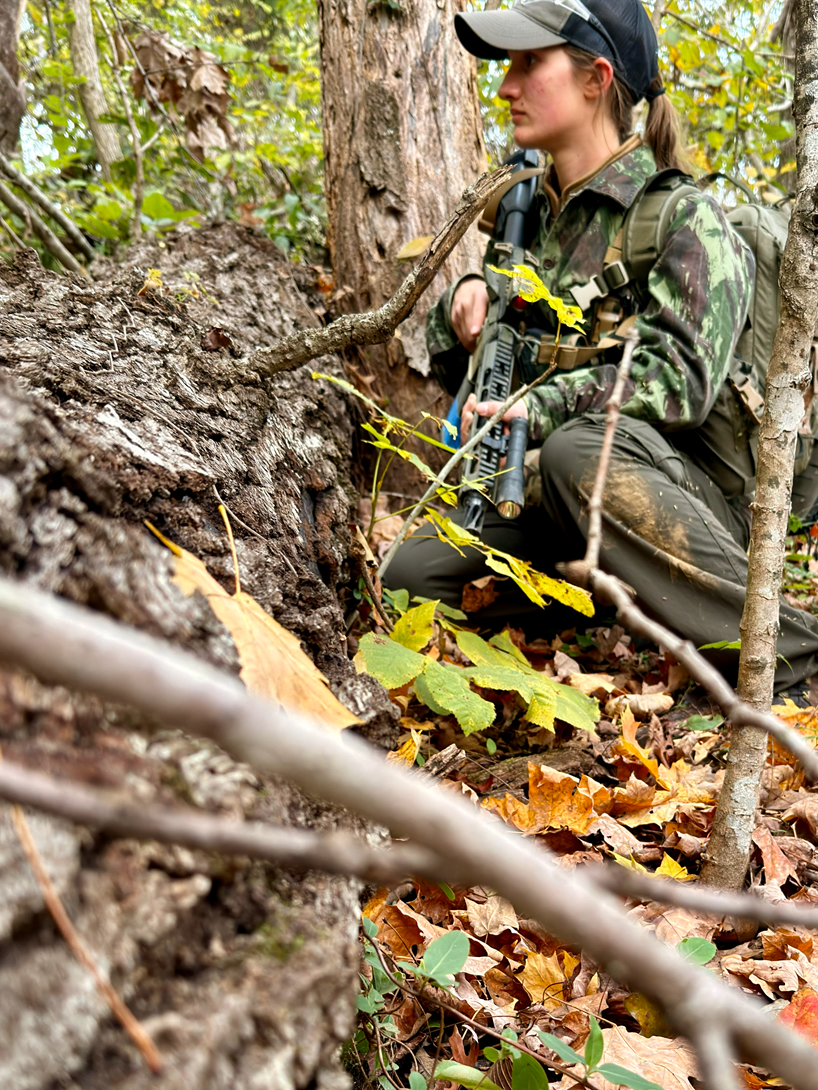
Why? Why is this important for you? Statistically 97.5% of you are dudes. Many guys would say that the woman's role is NOT that of a fighter. Under ideal circumstances, and maybe in other contexts, such as the military, I would agree with you.
But think about two things: Availability and Resource Density.
Availability: The men you train with or are in a group with, most likely, are not living in your home. The one person you can count on to most likely be there when things go down, is your spouse. She is the one who will be there; it makes sense that she be up to speed and equipped to be your teammate.
Resource density: It can be applied to a lot of factors, but it also applies to people. In a true collapse scenario or extended period without infrastructure support, you are going to have attrition. While the women's role may start out as defending the home, taking care of children, etc, there is no guarantee she won’t be forced into other roles eventually as manpower dwindles, or never makes to you in the first place (see: Availability)
Historically, we have seen this play out time and time again. The Troubles, The Baltic conflicts of the 90’s, the fight against ISIS. Women will step into a combat role when needed.
If you are a woman and reading this, my apologies for wording the article the way I am. I can only speak from my perspective, which is that of a man, trying to help outfit his wife.
If you thought setting up a kit for yourself was a pain, with the constant adjustments, trying to build in scalability, capability, ease of use, and comfort, you should really try setting up a kit for a woman. (this can also apply to teenagers or younger folks, maybe even small, lightweight men)
Lack of real estate, curves that dudes don’t have, and gear not being designed with a woman in mind, all contribute to one of the more difficult gear challenges that I have dealt with.
I recently married my best friend and training partner, Emily. Long before we were married, we have been trying to problem-solve equipping her for training, and figuring out how to modify, makeshift, and invent our way to a workable solution.
In addition to Emily, I had conversations with my sister in law Hannah, and a friend of mine from DARC, Jordan. Jordan’s insight is particularly interesting given her training background which includes extensive experience at DARC, both as a student and as OpFor. She has trained harder than any woman I have ever met, and her insight is invaluable.
As opposed to just telling you what to do, I am going to share with you the principles and lessons we have learned, and continue to learn along the way.
Women are very differently shaped than men, and each other, so what works for Emily, Hannah, and Jordan, may not work for you, or for the women in your life, but hopefully the principles will apply and you can figure out your situation accordingly.
Step one: Use case
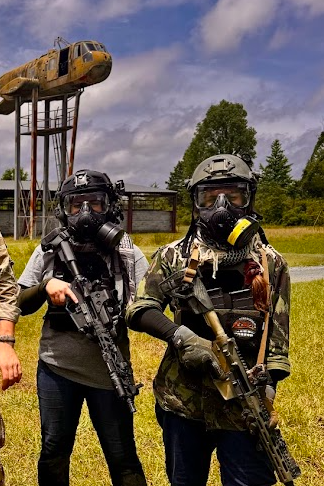
First you need to determine what the use case is for the kit. Is it just range training? Preparedness? Field training exercises?
Within each use case, is a plethora of other factors to consider. What is this woman’s role? What do they need to be capable of? Is that realistic from a performance and training perspective? What level of fitness and training does she have, or aspire to have? Is this loadout for a specific mission set?
All of these questions must be answered before you even get started. Things can, and will, evolve over time. Maybe her commitment to training will increase or decrease, or her role will shift as children enter and exit the picture, but you need a baseline use case to get started.
For context, Emily’s use case is for field training, preparedness, and range training. She fills the role of a fully capable team member.
Her kit is based around the most likely (in our estimation) scenario where she would need kit, which is a fairly low-intensity conflict. She has the drive and resources to attain a high level of proficiency and is physically fit enough to execute tasks in a field environment. She is a slim body type, approximately 5ft 2in and 125 lbs.
Step two: Determine what is needed
What needs to be carried is determined by use case, team composition, and what can physically be carried. You shouldn’t expect a 125lb woman to carry a man’s full combat load, water, sustainment gear, and team equipment, IF that is not what her role requires. The general rule of thumb is that the combat load carried on the body is 30% of body weight, and 45% of body weight for a sustainment load.
Anyone who does this kind of thing knows full well that rule gets broken often, and it doesn’t matter what gender you are. Sometimes the number of things you can get rid of is 0.
Jordan had some great insight on this: “my experience especially with DARC, I did not get a choice to carry less weight, my first TUSC I rocked a 55lb pack just like the dudes did and I'm also 125lbs (5'2). Granted now, I try not to do more than 45lbs but realistically you can't always tailor your gear down because there's a subset amount of gear that you can't get rid of (especially for get-home bags or mission load outs). Now she can off load her gear to someone but then someone else is going to have to carry it.
So I think realistically you need to mention for the heavier load outs she'll either need to get in shape to ruck heavy packs or someone else will have to carry the gear for her. At some point she'll become a liability depending on how much she can't carry. So as much as it sucks, females are at a natural disadvantage and there's a lot we just have to suck up and deal with.”
By understanding requirements for your mission or goal, and the woman's role/capabilities, you can begin to add or subtract gear that will be needed to perform that role, and balance that with her body weight and what she can feasibly carry.
You need to very carefully consider Step 1 as you figure out Step 2. Don’t get lost in fantasy land.
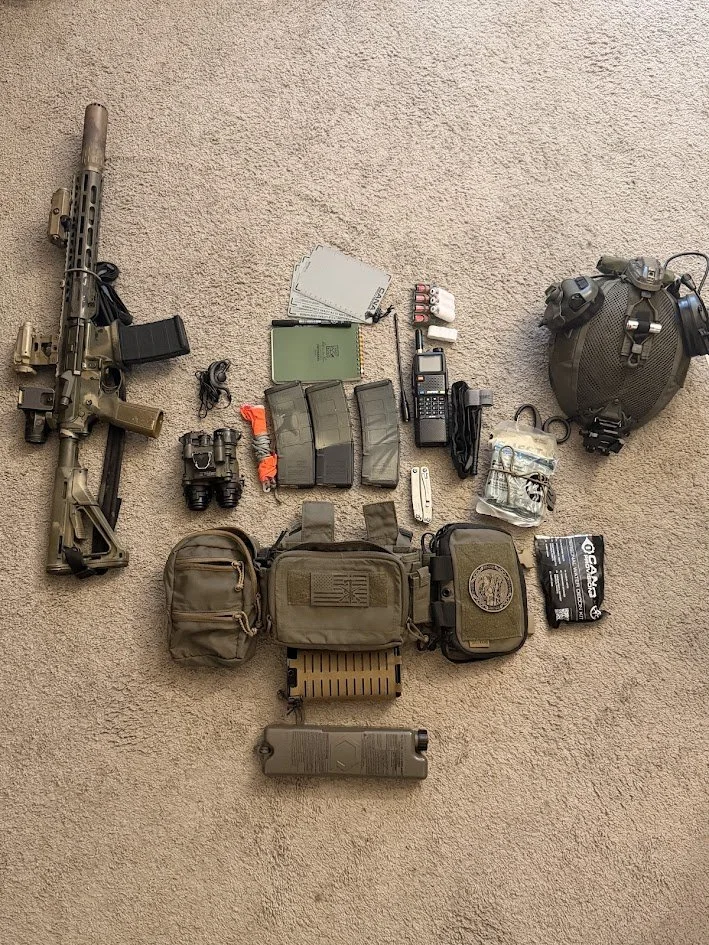
For my example, Emily’s role needs: Rifle, ammo, comms, water, medical, admin, and signaling gear on her fighting load. Being that she weighs in at about 125 lbs, ideally all of that to weigh less than 37lbs. Her current setup weighs in at 25.2 lbs, meaning we have the ability to scale.
With “low intensity” as the scenario this kit is meant for, it prioritizes mobility and light weight over capability and sustainment. It includes:
4 magazines
Ifak
Radio with ptt, spare ptt, and spare antenna
500ml of water (more carried in pack)
Cana Water decon kit
Batteries
Water Data cards
Notebook, pencil, marker
Signalling kit
NVGs
Rifle is an 11.5 with suppressor, LAM, red dot, 3x magnifier, and white light.
Step Three: Making it work
This is where you are going to have to get real creative. Once you have determined the use case, and what she will need to carry, you have to figure out a system that will work. This is going to address some high level things, specific examples are in the tips section below.
I suggest having a few things on hand. You should have this stuff anyways, but it's especially handy when making alterations. Scissors that can cut nylon, sewing kit, Velcro one wrap, Zip ties, repair buckles, 1 in nylon webbing, 550 cord, and a lighter.
I wish I could tell you what to do here, but it's really just a process of “try this on, where does it suck, how do we fix it so it doesn't suck”. Most gear is not meant to be adjustable to fit the size and dimensions of a woman. This means cutting things, sewing new things, shortening things, and getting real crafty. For example, the X harness on this chest rig wouldn't tighten up enough. So, I had to cut away the built in loops for the buckles, and fashion a new mounting solution higher up using some spare webbing and buckles. Be sure that you consider the load bearing capabilities when you sew something on a chest rig.
Jordan has had her Spiritus kit tailored by a seamstress to fit better.
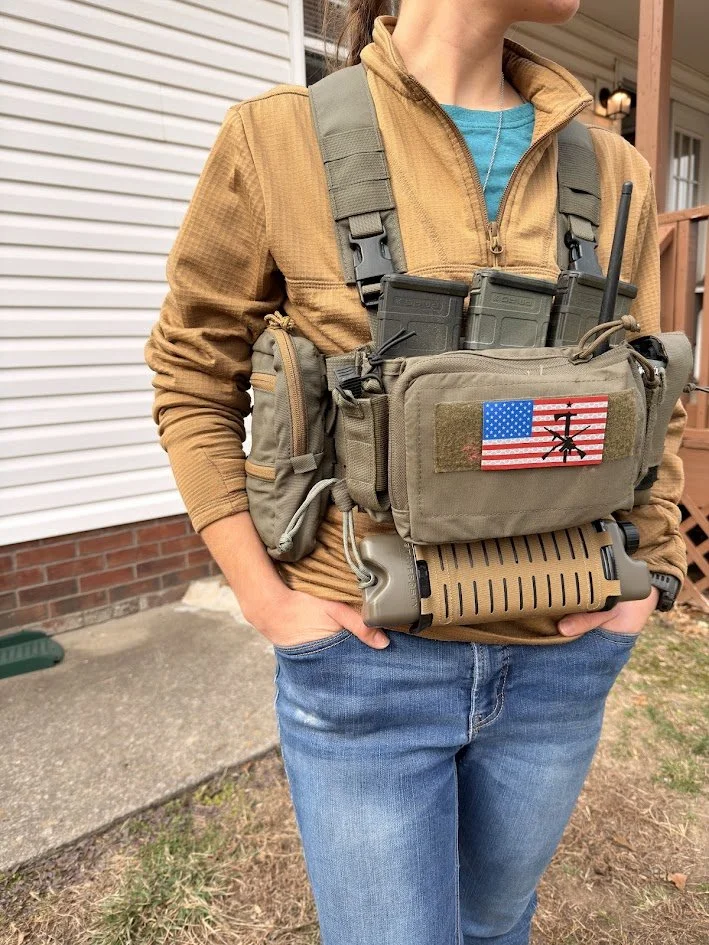
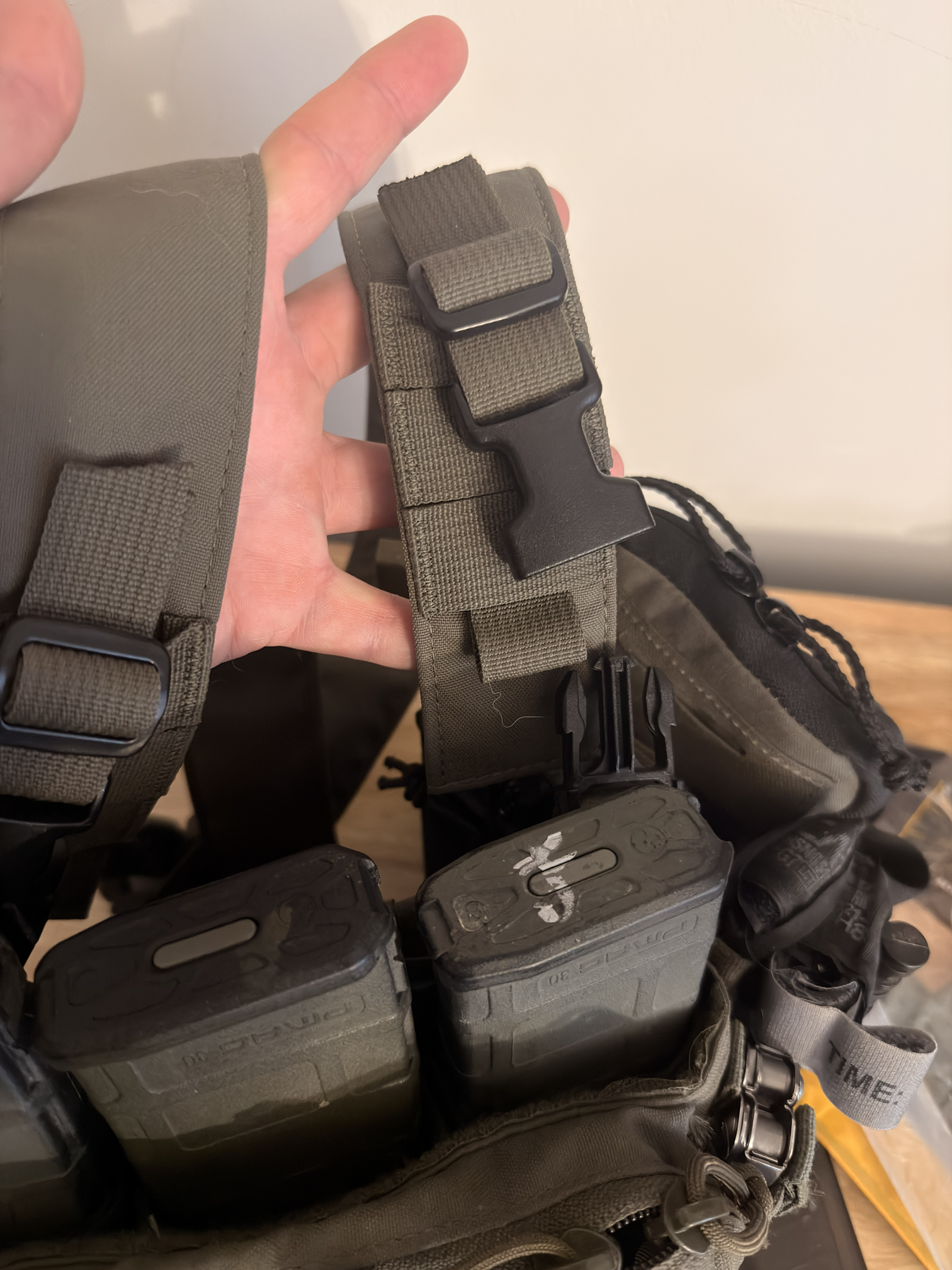
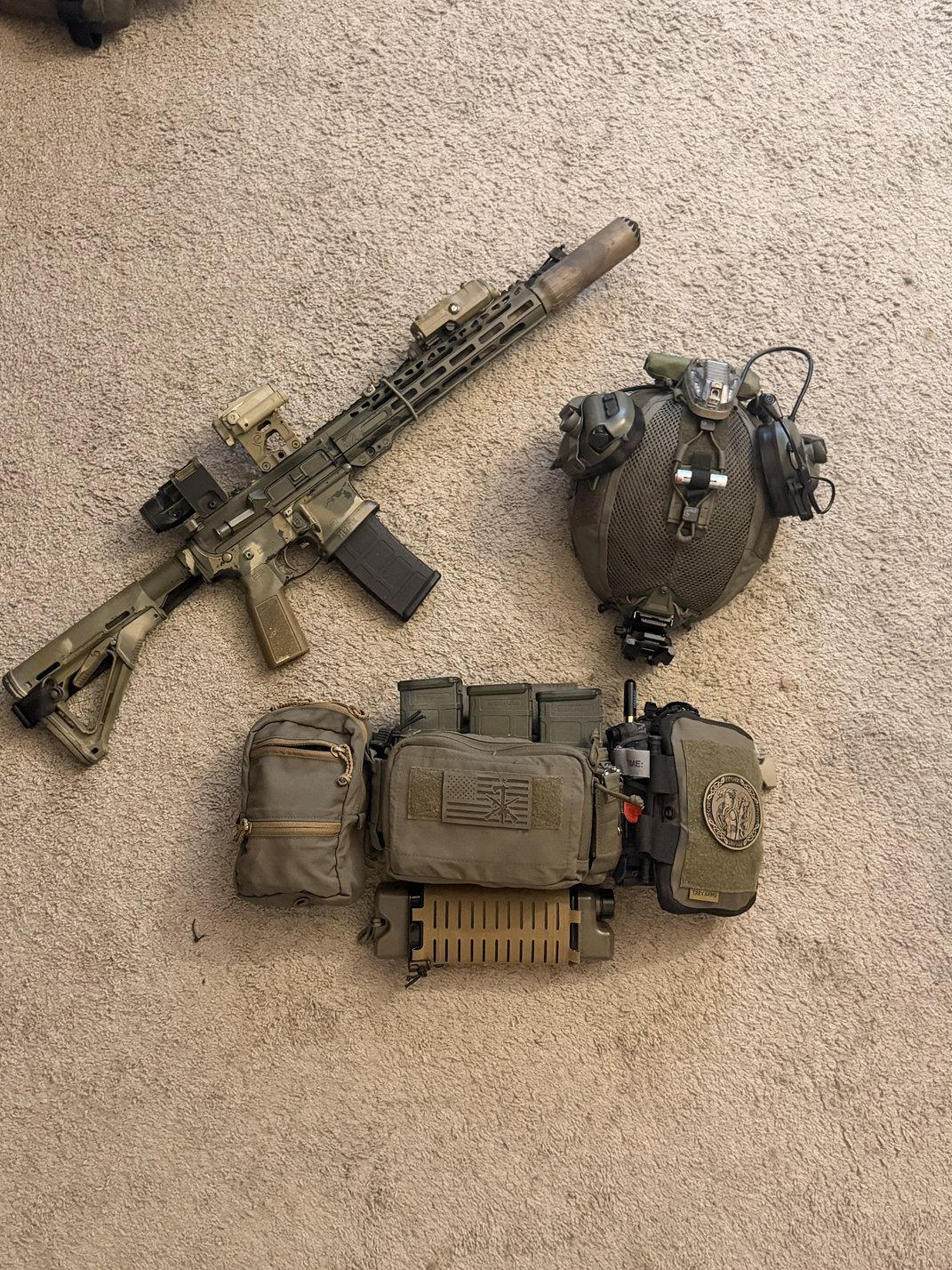
Test your kit always fully loaded. The weight and bulk matter. Full magazines, full water. It shouldn't be pinching, pulling, or acutely uncomfortable at all. That discomfort will turn into pure misery the first time she is wearing it for an extended period.
Always keep step 1 and 2 in mind. You may need to adjust what she is capable of based on if you can make the kit work. There are things you can compromise and things you can’t, but those determinations are up to you.
Tips and tricks:

This is just going to be a compilation of tips and tricks I have discovered in my time working/talking with Emily, my sister in law Hannah, and Jordan.
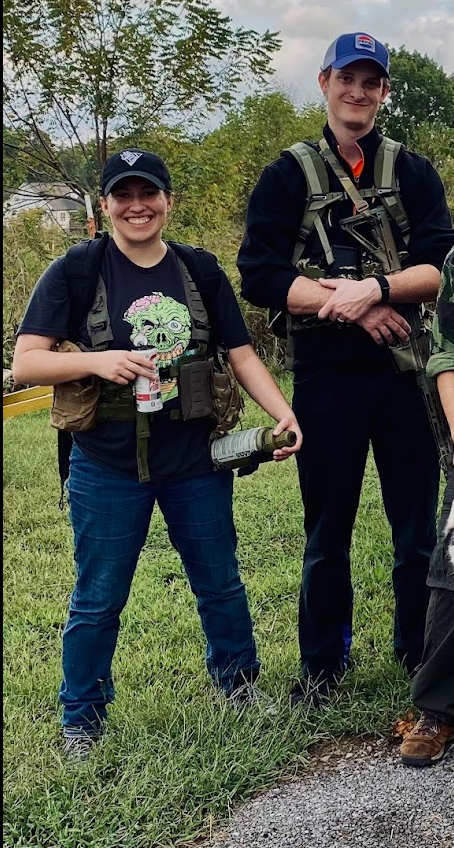
For bigger chested women, split rigs are probably the play. Keep the rig adjusted so its below the breasts. The harness is going to be the most important part to get right as it needs to keep the straps on the shoulders and not pushed off the sides completely. You can see this demo’d by my sister in law Hannah and by Jordan. They both use the Spiritus 34A.
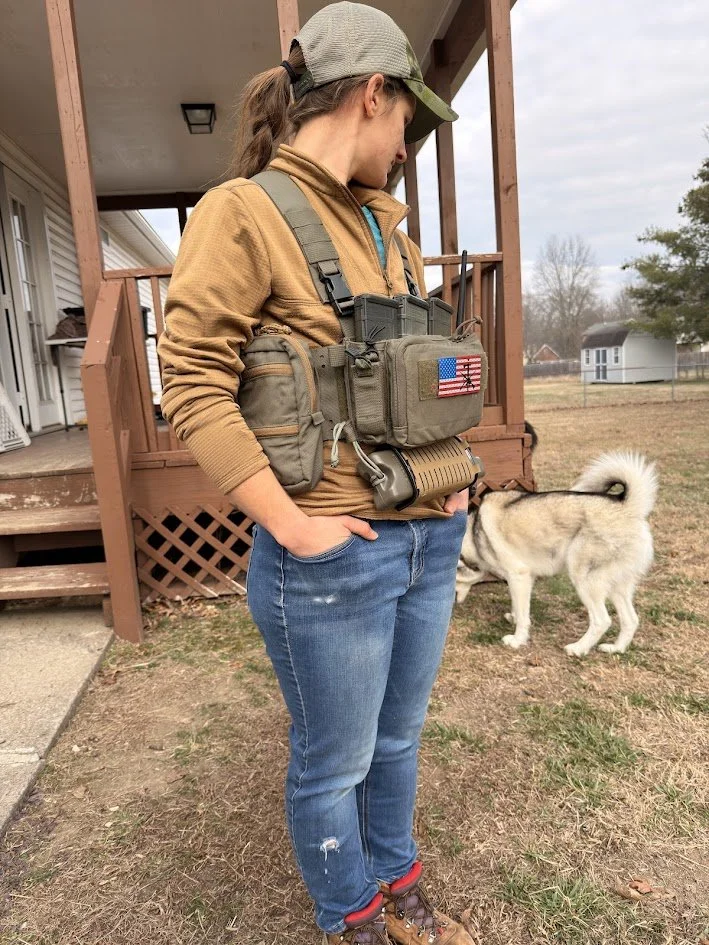
For slimmer women, a Rhodesian or standard chest rig tends to work well, as long as it's adjusted well. It needs to sit below the breasts, as putting it on top will put the magazines angled into her chin.
Take full advantage of danglers and wings. With the lack of real estate, it's very helpful to utilize alternate attachment methods that don't require additional molle rows. See Emily’s water source, and radio.
X harnesses work best for slimmer women. H-harnesses are built for a man's broad shoulders, it's a struggle to get them to work on women comfortably.
Know your measurements. Get a fabric measuring tape and know the bust, hip, waist, thigh, inseam, and sleeve measurements. This is very handy when buying clothing or packs. Sometimes you can get away with ordering small mens sizes, but sometimes you need to either spend the money on women specific clothing, or have things modified by a tailor.
Plate carriers are a whole other beast. There are armor plates meant for women, but they still just suck. The bigger the chest the bigger the problem it is. Best advice I have gotten is get a good sports bra that keeps the ole girls tucked in and suck it up. Shooters cut and swimmers cut plates are preferred.
Packs are a topic I'm still trying to solve. Jordan uses an EXO Mountain Gear pack, and emailed them directly to get a child-sized frame.
closing thoughts
This article is just covering the wavetops. There is a lot to unpack when it comes to women and kit, from roles and capabilities to physical ability and commitment levels. I think Jordan said it best when she said “I think overall it comes down to either she can do it, she can mostly do it but someone has to pick up her slack, or she shouldn't do it at all.”
Women are capable of contributing to your group. I understand why some people avoid the topic completely or outright forbid women to train with them. It’s a complication, and anyone who trains seriously will tell you that the women who can hang are very few and far between.
That being said, Availability and Resource Density are always factors in play. If you can encourage the women in your life to start taking training and gear more seriously, you are putting yourself in a better position than if they stay helpless and unable to contribute. It may not be a contribution in the sense of a fully fledged fireteam member, but someone who can pull security, knows how to patrol, and can fill in during a tough time is worth the effort.
Figuring out her gear is just one step in the process.
Thanks
Huge thanks to my wife and training partner Emily (@ak_m_training on X). Without your input and trial and error, this article wouldn’t have been complete. Without you, my life would be incomplete.
Thanks to my sister-in-law, Hannah (@nox1040533 on X), your feedback was helpful, as it always is.
Thanks to Jordan (@river_mx_chick on IG) Your depth of experience was invaluable in helping me put these thoughts on paper. See you on the island again soon!
